Cannabis Education
What Are Terpenes?
The aromatic compounds that determine how cannabis smells, tastes, and -- most importantly -- how it makes you feel.
The Fundamentals
Terpenes Are Everywhere in Nature
Terpenes are organic aromatic compounds produced by plants, fruits, and even some insects. They are the reason lavender smells calming, lemons smell energizing, and pine forests smell refreshing. Cannabis produces over 200 different terpenes, though most strains are dominated by just two or three.
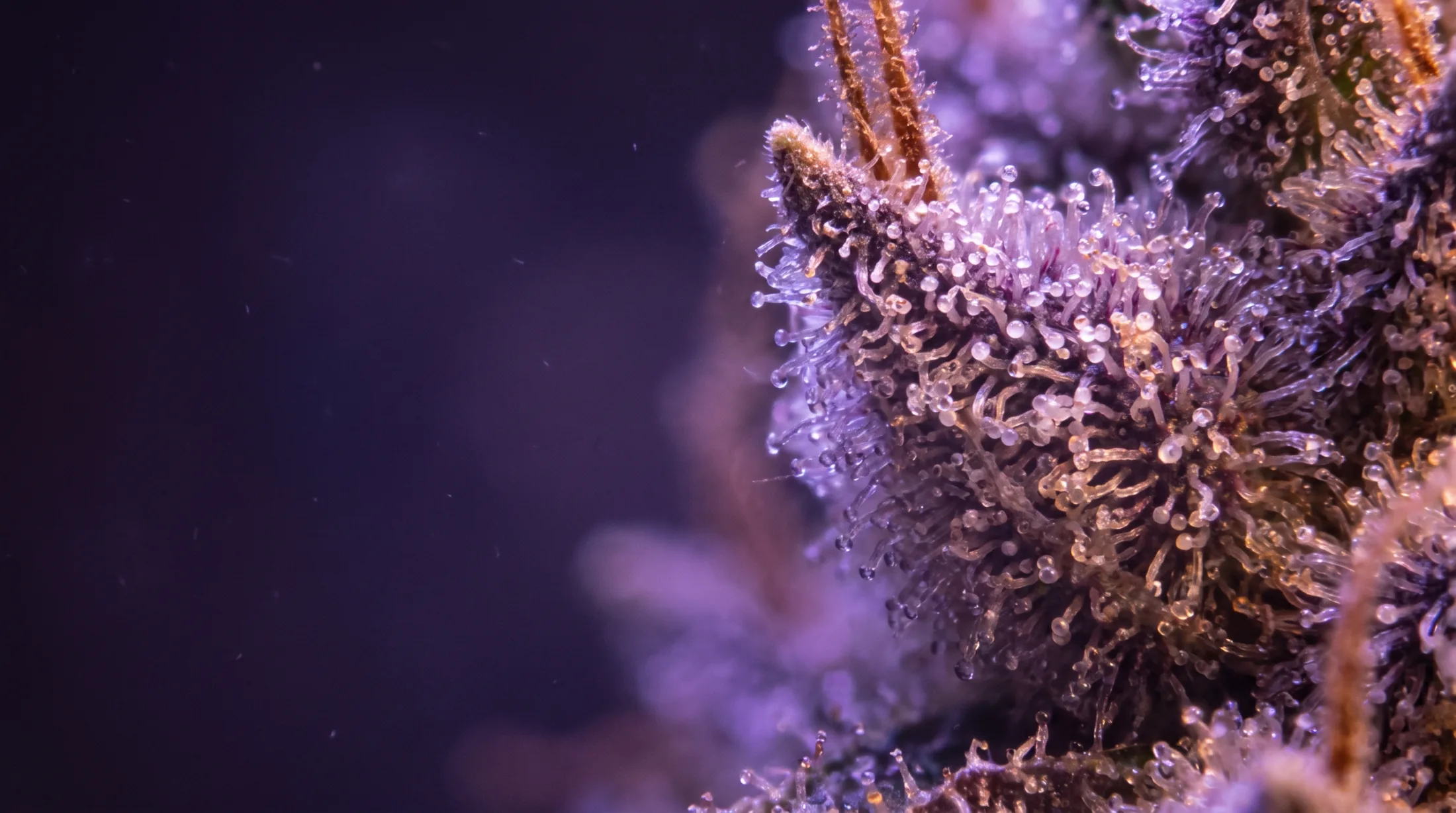
In the cannabis plant, terpenes are synthesized in the same glands that produce cannabinoids like THC and CBD -- the trichomes. Those frosty, crystal-like structures covering quality flower are terpene and cannabinoid factories.
Unlike cannabinoids, terpenes are not unique to cannabis. You consume them in food, breathe them walking through a garden, and apply them through essential oils. What makes cannabis terpenes special is how they interact with cannabinoids to shape your experience.
The Science
The Entourage Effect
The entourage effect is the theory that cannabis compounds work better together than in isolation. THC alone produces a certain experience. THC combined with myrcene, linalool, and CBD produces an entirely different one.
This is why two strains with identical THC percentages can feel completely different. The supporting cast of terpenes and minor cannabinoids modulates, enhances, or tempers the effects of THC in ways we are only beginning to understand.
How It Works
- Terpenes can cross the blood-brain barrier
- Some terpenes enhance THC absorption
- Others modulate receptor activity, softening or redirecting effects
- CBD and terpenes together may reduce THC-induced anxiety
- Full-spectrum products preserve the natural terpene-cannabinoid ratio
Terpene Profiles
6 Major Cannabis Terpenes
These six terpenes appear most frequently in commercial cannabis strains. Learning to identify them by aroma is the fastest way to predict how a strain will affect you.
Myrcene
Aroma: Earthy, musky, herbal with clove undertones
Effects: Deep relaxation, sedation, muscle tension relief. One of the most abundant terpenes in commercial cannabis.
Common strains: OG Kush, Granddaddy Purple, Blue Dream
Best for: Evening and nighttime use
Limonene
Aroma: Bright citrus, lemon zest, orange peel
Effects: Mood elevation, stress relief, energizing. Research suggests anti-anxiety and antidepressant properties. Often produces an uplifting, social experience.
Common strains: Wedding Cake, Lemon Haze, Do-Si-Dos
Best for: Daytime, social occasions
Pinene
Aroma: Fresh pine, earthy, herbal
Effects: Mental alertness, memory retention, anti-inflammatory. The most common terpene in nature. May counteract some short-term memory effects of THC.
Common strains: Jack Herer, Snoop's Dream, Critical Mass
Best for: Morning, creative work, outdoor activities
Linalool
Aroma: Floral, lavender, sweet with spicy undertones
Effects: Calming, anti-anxiety, sleep support. The same compound that makes lavender relaxing. Shown to reduce stress responses in clinical settings.
Common strains: Amnesia Haze, Lavender, LA Confidential
Best for: Evening wind-down, stress relief
Caryophyllene
Aroma: Peppery, spicy, warm, woody
Effects: Anti-inflammatory, pain relief, stress reduction. Unique among terpenes: it binds directly to CB2 receptors in the endocannabinoid system, making it functionally a cannabinoid as well.
Common strains: GSC, Bubba Kush, Sour Diesel
Best for: Anytime, especially for physical discomfort
Humulene
Aroma: Hoppy, earthy, woody, subtle spice
Effects: Appetite suppression, anti-inflammatory, antibacterial. Found abundantly in hops -- if you enjoy the aroma of craft beer, you already know this terpene.
Common strains: White Widow, Headband, Pink Kush
Best for: Daytime use when appetite suppression is preferred
Licensed, lab tested, and answered in plain language.
Practical Application
How to Read Terpene Lab Results
Curated cannabis products in New York include terpene data on their lab certificates. Here is how to interpret what you see.
Total terpene percentage
Typically ranges from 1% to 5%. Higher total terpene content generally means more aromatic and flavorful flower with more pronounced effects beyond just THC.
Dominant terpene
The terpene with the highest percentage. This is the primary driver of the strain's aroma and a strong predictor of its effects.
Terpene ratio
The relationship between the top 2-3 terpenes. A strain dominated by myrcene with secondary linalool will feel different from one with myrcene and limonene as the secondary.
Trace terpenes
Terpenes present below 0.1%. Individually subtle, they contribute to the entourage effect and help explain why two strains with the same dominant terpene still feel different.
Preservation
Storage and Terpene Degradation
Terpenes are volatile compounds that evaporate and degrade when exposed to heat, light, and oxygen. Proper storage preserves the terpene profile you paid for.
Keep it cool
Store cannabis between 60-70 degrees Fahrenheit. Heat accelerates terpene evaporation.
Keep it dark
UV light breaks down terpenes and cannabinoids. Opaque containers or a dark cabinet are ideal.
Keep it sealed
Air exposure oxidizes terpenes. Glass jars with airtight seals outperform plastic bags.
Keep humidity balanced
Ideal relative humidity for cannabis storage is 55-62%. Too dry and terpenes evaporate; too humid and mold risk increases.
Terpenes at a Glance
Cannabis terpenes, quick facts.
- Myrcene
- Earthy, musky, calming, body-heavy
- Limonene
- Citrus, uplifting, mood-boosting
- Pinene
- Pine, alert, focus-supportive
- Linalool
- Floral lavender, relaxing, sedating
- Caryophyllene
- Peppery, spicy, anti-inflammatory potential
- Humulene
- Hoppy, woody, appetite-suppressing potential
- Found On
- COA terpene panel for every batch
What's the entourage effect?
Do terpenes get you high?
Which terpene helps with sleep?
Shop by terpene, not by label
Our budtenders can guide you through terpene-rich products and help you find the aroma and effect profile that fits what you are looking for. Just ask.
This content is for educational purposes only and is not medical advice. Terpene effects described are based on available research and may vary by individual. Purple Buds Dispensary is licensed by the NYS Office of Cannabis Management (OCM-RETL-25-000449).