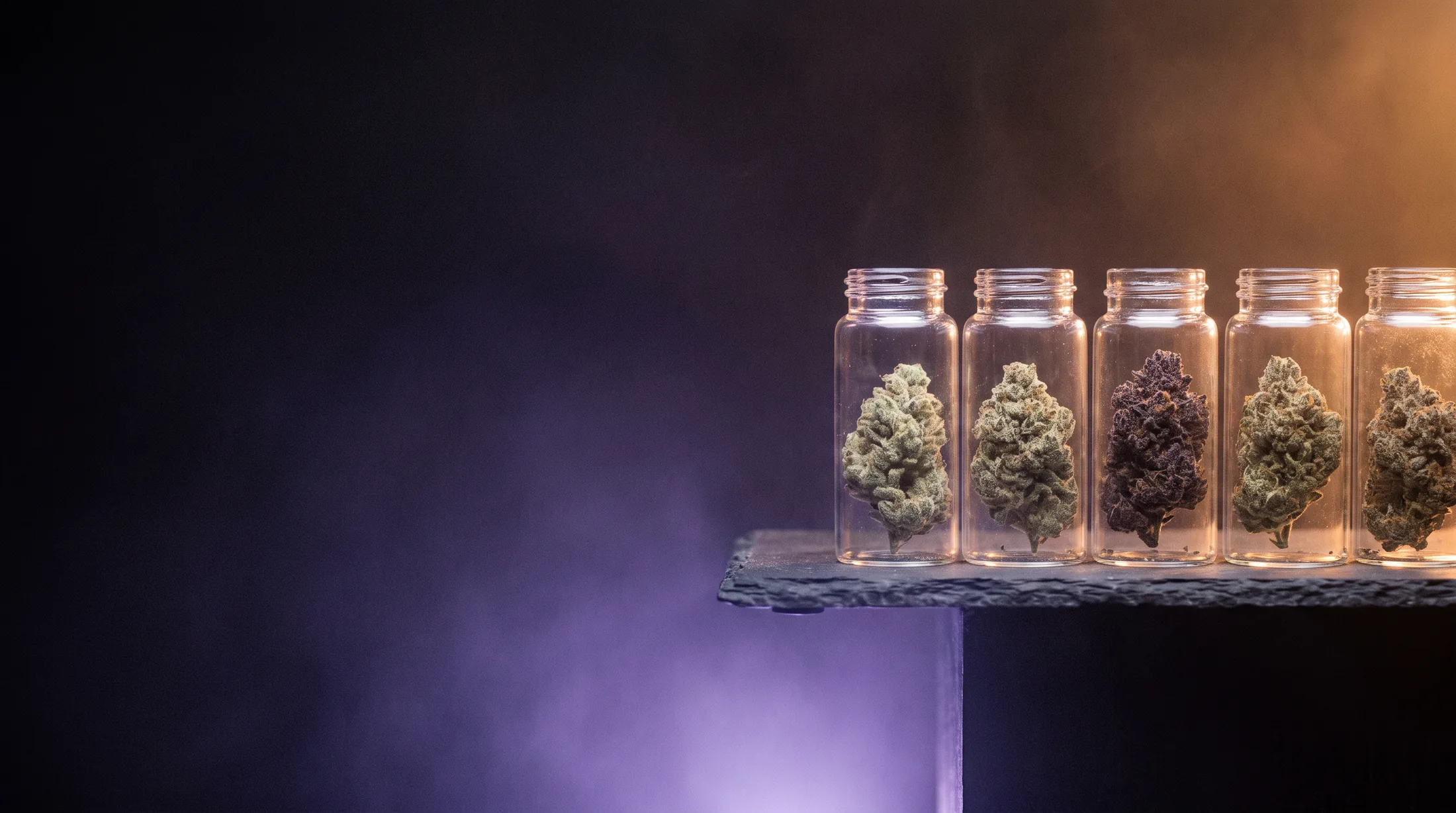
Indica, sativa and hybrid labels are a loose shorthand, not a reliable prediction of how a cannabis product will feel. A 2021 study in Nature Plants found that sativa- and indica-labelled samples were genetically indistinct on a genome-wide scale, and that the label tracked only a small number of terpenes. A product's terpene and cannabinoid details describe its measured chemistry more directly than the word on the jar.
That does not make the labels useless. They are the first filter on almost every cannabis menu, including ours, and they carry a little real information. The useful skill is knowing how much weight to give them, and what to check next.
What genetic testing found inside indica and sativa jars
The Nature Plants study by Watts and colleagues compared the genetics and the chemistry of cannabis samples against the label each one was sold under. The genetic result was blunt. Plants sold as indica were not a separate genetic family from plants sold as sativa.
A second team sequenced 23 strains sold on the Canadian market and published the results in PLOS ONE. They concluded that the indica and sativa naming convention "has become unreliable and inadequate for identifying or selecting strains for clinical research and medicinal production."
The doubts are older than the genome work. In a 2012 chemistry paper that compared cultivars across 28 compounds, Hazekamp and Fischedick wrote that "it is unclear whether such classification reflects any relevant differences in chemical composition."
The one compound that does follow the indica label
The labels are not random, though. The Nature Plants team found they lined up with a small set of terpenes, and the strongest link was with myrcene, an earthy-smelling terpene common in cannabis. Per the published paper, myrcene's "concentration explained 21.2% of the variation in labelling."
Read that number carefully. A product sold as indica is somewhat more likely to carry more myrcene. In that analysis, close to four fifths of the variation in labelling remained unexplained by myrcene concentration. A jar marked indica can be low in myrcene, and a jar marked sativa can be high in it. Our myrcene breakdown covers where the compound shows up and what the research on it does and does not support.
What lab results from six states show
A 2022 analysis by Smith and colleagues looked at commercial lab data from six US states and published its findings in PLOS ONE. The headline conclusion: "commercial labels do not consistently align with the observed chemical diversity. However, certain labels do show a biased association with specific chemotypes."
When the researchers grouped THC-dominant products by terpene profile, the samples fell into three main clusters. Only one of them, a cluster high in terpinolene and myrcene, held more sativa-labelled products than chance would predict. Indica and sativa labels did not stand out in the other two.
Strain names did a little better than the three category labels. The authors still warned that names "are far from ideal" as a marker of what is actually in the product.
How to use the labels on our menu
The Purple Buds live menu sorts products into five types: Indica, Indica-Hybrid, Hybrid, Sativa-Hybrid and Sativa. It also filters by effect tags such as Calm, Relaxed, Energetic and Creative. Those filters are a fine place to start, as long as you treat them as a first cut rather than a promise.
A practical order of operations:
- Use the type filter to narrow the menu to a starting shelf.
- Open a product and look for its terpene information. Where the dominant terpenes are listed, they say more about aroma and character than the type label does.
- Check the THC and CBD figures on the listing. The balance between the two is a separate variable that the type label does not capture.
- Ask a budtender to compare two products side by side. That comparison is where the label shorthand gets filled in.
Our strains explained guide walks through the vocabulary itself, and the terpene guide covers the other terpenes you will see listed. Browsing flower by strain is the easiest way to practice reading a listing before you visit.
Questions we hear about indica and sativa
Does indica mean relaxing and sativa mean energizing?
That is how the labels are commonly described, but the research does not support treating it as a rule. The genetic and chemical studies above found the labels track only a few terpenes, and loosely. Cannabis researcher Ethan Russo put it plainly in a 2016 interview: "only a biochemical assay tells a potential consumer or scientist what is really in the plant."
What does hybrid mean on a dispensary menu?
Hybrid is the label sellers use for products they place between the two categories. Hybrid is a broad menu category rather than a reliable description of a product's chemistry. Treat it the same way: a starting filter, followed by the terpene and cannabinoid details.
What should I look at instead of the label?
Look at the cannabinoid figures and, where they are listed, the dominant terpenes. Smith and colleagues found that on average myrcene, beta-caryophyllene and limonene were present at the highest levels in commercial cannabis, so those are the names you will see most often. Then describe the experience you want to a budtender and let them compare options from what is on the shelf today.