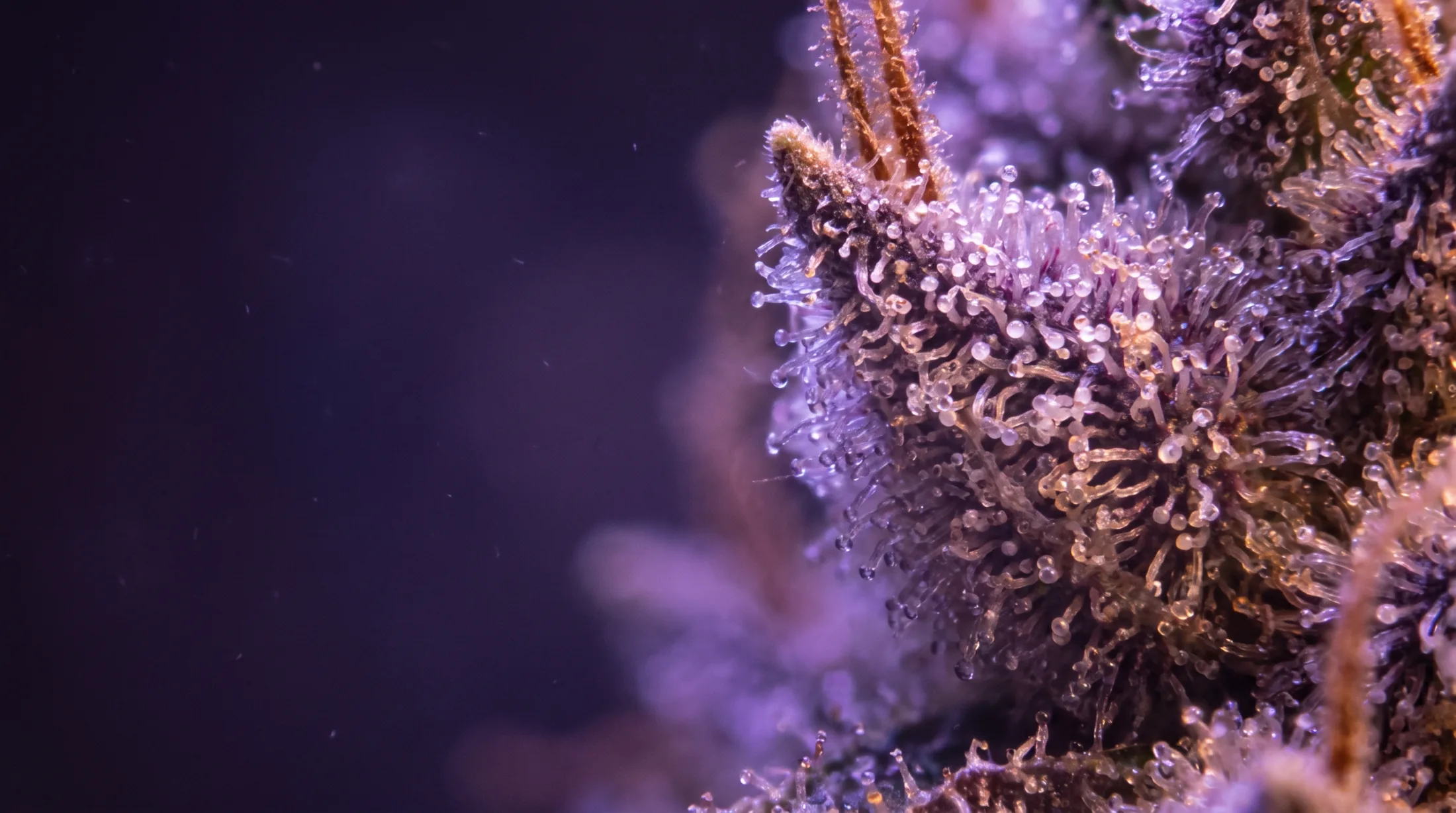
Myrcene is an earthy, musky terpene and one of the most abundant in commercial cannabis. A 2022 analysis of lab data from six US states found myrcene, beta-caryophyllene and limonene at the highest average levels, and myrcene is the single compound most closely tied to the indica label. Its reputation for sedation rests mostly on animal research, so treat that part as unproven in people.
Where else you have already smelled myrcene
Myrcene is not unique to cannabis. A 2021 review in Frontiers in Nutrition describes it as occurring "especially in the essential oils of plants such as hops, cannabis, lemongrass, verbena and bay." If you know the smell of a hoppy beer or a fresh bay leaf, you know part of what myrcene contributes to a jar of flower.
You may also have heard that eating a ripe mango before a session strengthens the effect. We looked for a human study that tests it and did not find one, and the same review notes that research on myrcene in humans is lacking. We found no human evidence supporting it, so we do not repeat it as advice.
How much of it is in cannabis
The six-state analysis by Smith and colleagues, published in PLOS ONE, sorted commercial products by their terpene profiles. Across the samples, myrcene sat in the top three by average level. It was also the dominant terpene in most of the CBD-dominant and balanced THC:CBD products the authors examined.
Myrcene is also the reason the indica label is not pure noise. A 2021 genetic study in Nature Plants found that the indica label lined up most strongly with myrcene. Per that study, myrcene concentration explained 21.2% of the variation in how samples were labelled. That is a real signal and a modest one, which is why our guide to indica and sativa labels recommends checking the terpene details rather than trusting the label alone.
What the sedation research actually shows
Myrcene's "couch-lock" reputation traces back to a short list of sources, and it helps to know what they are.
| Source | What it tested | What it found | Limits |
|---|---|---|---|
| do Vale and colleagues, 2002 | Myrcene injected into mice at 100 or 200 mg/kg | Sedative and muscle-relaxing effects, and longer drug-induced sleep only at the highest dose | Mice, injected doses, isolated myrcene rather than cannabis |
| Russo, 2011 review | Existing animal data and traditional use of hops | Proposed that myrcene, combined with THC, may produce couch-lock | A hypothesis, not a human trial |
| Surendran and colleagues, 2021 review | Published research on myrcene | Promising results in animals | States that human studies are lacking |
The mouse study's abstract adds a detail worth knowing: myrcene showed no anti-anxiety effect, and a slight anxiety-like effect at the higher doses. Russo's 2011 paper framed the sedation link carefully, writing that the data "would support the hypothesis that myrcene is a prominent sedative terpenoid in cannabis."
One more correction. You will often see a claim that flower above 0.5% myrcene causes couch-lock. That threshold does not appear in Russo's 2011 paper, which is where it is usually attributed, and we could not find a primary source for it. We leave it out of our recommendations.
Finding myrcene on a New York label
New York rules give you a direct way to check a product's terpenes. Every adult-use cannabis label in the state carries a scannable bar code or QR code linked to the product's certificate of analysis, and the state's licensed labs test for terpenoids among other things. Scan the code on the package, open the lab report, and look for beta-myrcene in the terpene panel.
The package itself has to show a terpene profile only when the product markets its terpenes, so the lab report is the more reliable place to look. If you would rather not read a lab report standing at the counter, ask a budtender to pull up two products and compare their terpene panels with you.
For reference, PubChem lists myrcene's boiling point at 167 °C, about 332.6 °F.
When you are ready to compare, browse flower on our live menu or start from the flower category page. Our terpene guide covers the other names you will see in the same panel.
Questions about myrcene
Does myrcene make cannabis more sedating?
That has not been shown in people. The evidence comes from mouse studies using isolated, injected myrcene, and Russo's 2011 paper presents sedation as a hypothesis. These studies do not establish how a terpene profile predicts an individual person's response.
Should I eat a mango before using cannabis?
There is no human research showing that it changes anything. Enjoy the mango for its own sake.
How do I find out how much myrcene a product has?
Scan the QR code or bar code on the label to open the certificate of analysis, then find beta-myrcene in the terpene results. Our budtenders can do the same lookup with you in the store.